
The Beginning
JUSTUS
The portrait that started everything.
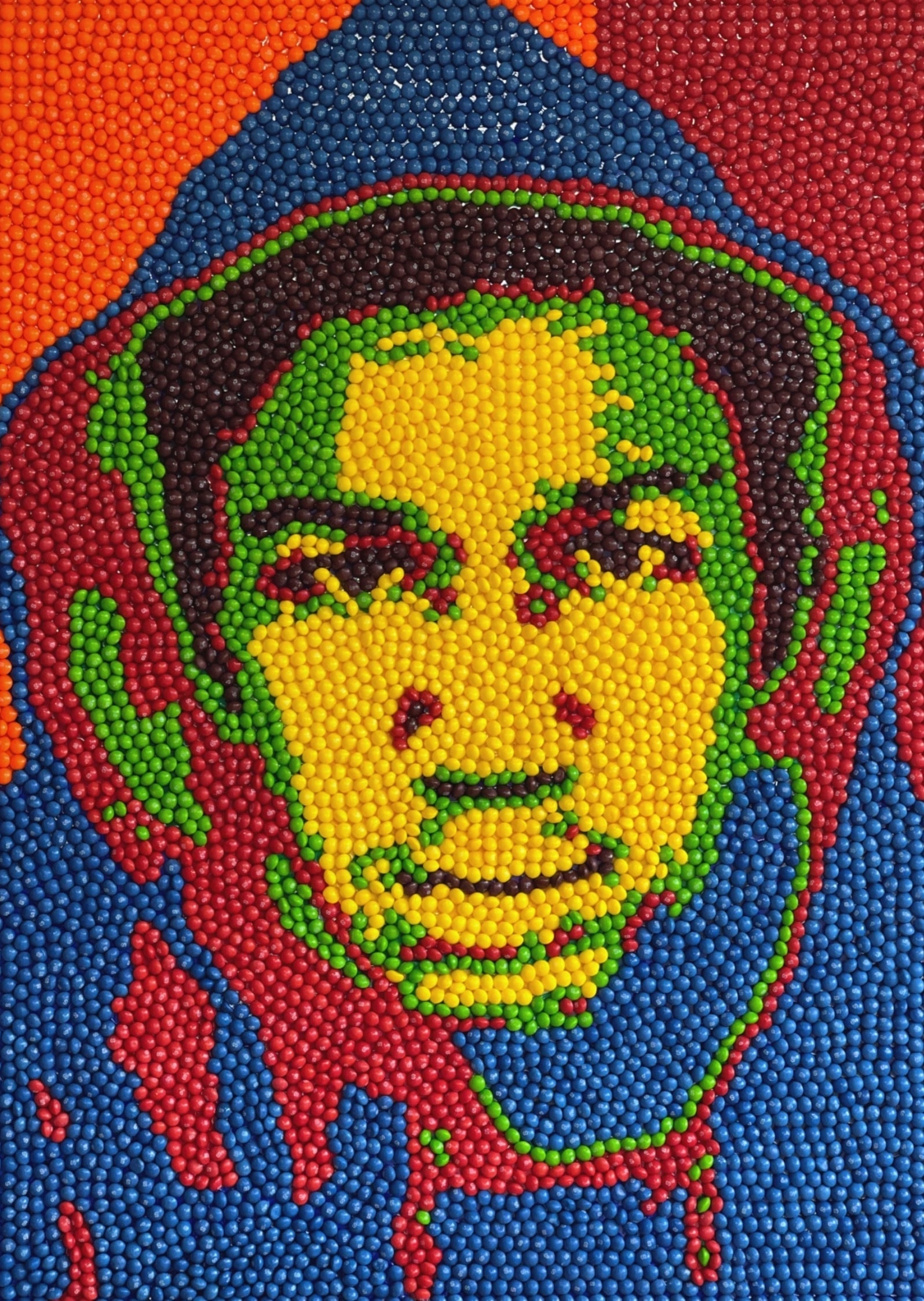
JUSTUS is not simply another portrait. It is the work that began Harold Caudio's journey with Skittles and helped shape the artistic philosophy behind everything that followed.
Skittles Candy on Canvas · 2013 · 30 × 40 inches
JUSTUS began as Harold's response to the acquittal of Trayvon Martin's killer in 2013. Harold wanted to create something that honored Trayvon's memory in a way that felt personal, meaningful, and impossible to overlook.
The work began with a simple question: how can an ordinary object carry the weight of an extraordinary story?
Using the candy associated with Trayvon's final moments, Harold created a portrait that transformed a familiar object into a lasting reflection on memory, identity, justice, and the value of human life.
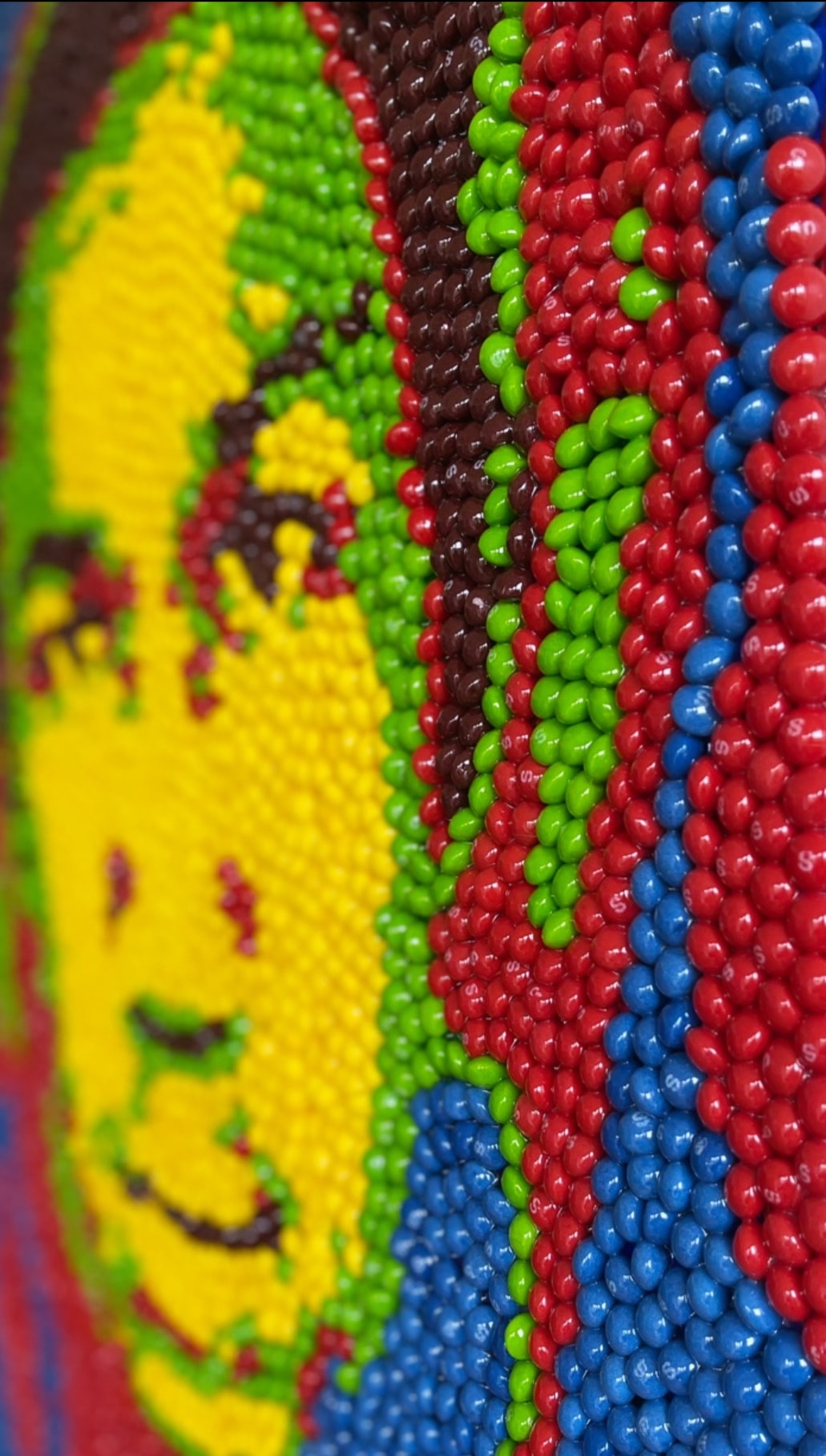
Skittles became the material because Harold sees something deeply human in them.
Each piece is delicate, yet protected by a hard outer shell. People can be much the same. Life shapes us. Experience teaches us to protect ourselves. What appears strong on the outside can still hold something incredibly delicate within.
Each Skittle represents a piece of a larger story. Each color represents a chapter in our lives. Every individual piece within that color represents a moment, an experience, or a person that helped define that chapter.
When those pieces come together, they create something greater than any individual piece could create alone. The colors are different, but they are powerful together.
For Harold, that is part of what makes the material meaningful. We are each shaped by different experiences, different chapters, and different moments. Together, those experiences become the story of who we are.
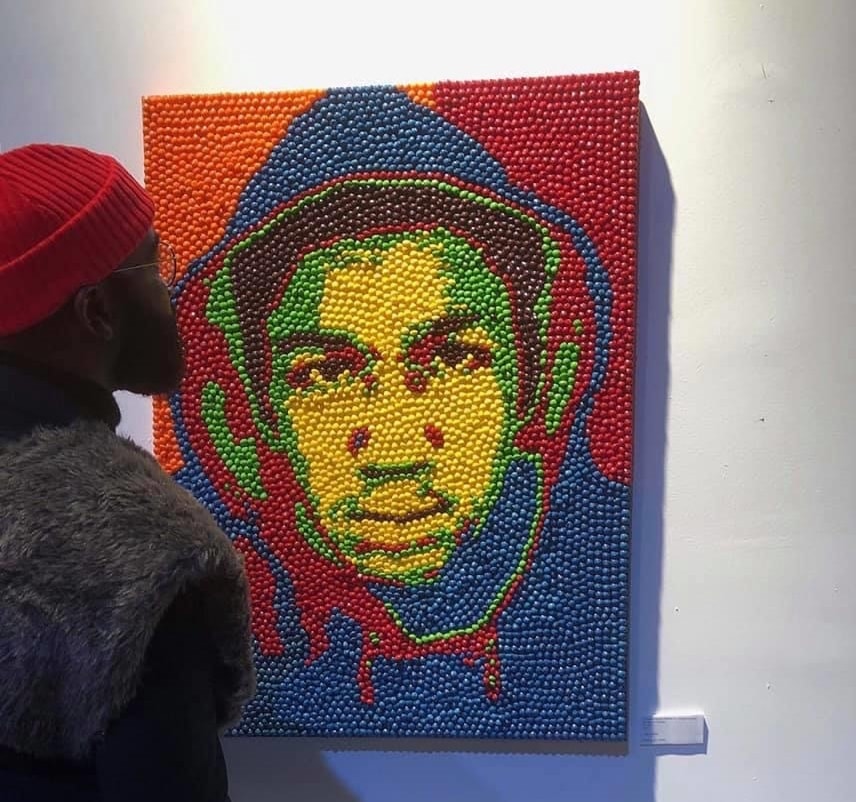
JUSTUS asks the viewer to consider how memory can be transformed into something that continues to speak.
The work holds beauty and difficulty in the same space. It invites the viewer to slow down and consider the person behind the story, the meaning behind the material, and the ways ordinary objects can carry extraordinary memories.
The title JUSTUS is intentionally spelled differently. The altered spelling creates a moment of pause and invites the viewer to consider what justice means, who receives it, and what remains when justice feels incomplete.
At its heart, JUSTUS is about memory, humanity, and the enduring search for meaning.
Finding Color in the Dark.
JUSTUS became an important turning point in Harold's practice.
The work brought national recognition and established a foundation for the way he would continue to explore art, culture, identity, and human connection.
It remains one of his most referenced works because of the question it continues to ask, not simply because of its scale.
JUSTUS marked an early point in Harold's evolution from visual artist to cultural architect, using art not only as an object, but as a way to create conversation and connection.
The work that began an evolving artistic journey rooted in identity, memory, and human connection.
Interested in bringing this story to your audience?
Bring the art, the story, and the experience together.